Friday, August 15, 2014

Welcoming Families From Around the World

  • The name of “your” family’s country of origin
The country of origin is Albania. Albanians are a native Balkan people who live in Southern Europe. They call themselves Shqiptare. Albanians live in ethnically compact settlements in large areas, primarily in Albania, Kosovo and Macedonia, but also in Montenegro and Greece. Albanian culture is unique and diverse. There are two cultural groups in Albanian territories: the Ghegs and Tosks. Ghegs live in the north part while Tosks live in the south part. Although there are some differences between the two cultural groups, they keep a strong national identity and ethnic culture. I chose Albania because we have several staff members who are employed at my center and at the beginning they speak limited English. When it comes to working with children they are very nurturing and caring. They treat them like they are their very own.

  • At least five ways in which you will prepare yourself to be culturally responsive towards this family
1.   In order to make a child from Albania feel welcomed we make a point of researching the culture so that we can incorporate their culture and beliefs and food into the program. For example, one of the largest holidays we celebrate is the pagan Summer Festival. It is celebrated on March 14 and it is intended to commemorate the end of winter, the rebirth of nature and a rejuvenation of spirit amongst the Albanians. 

2. Provide interpreters in the school setting to facilitate communication between parents of immigrant origin and their child's school.

3. Games that Albanians like is another way of being culturally responsive. We play hide and seek with the children. This is one of Albanian’s most popular children’s game. All Albanian children play this game at least every second day. Game rules are very simple. Children gather around a landmark, such a tree or a wall. One of them will be chosen to close eyes and count while others players hide. He or she will be called it When finishing counting it will call out “Ready or not here I come” and will go to search and look for other players. While it is searching, other children try to run to home base; therefore it should be very careful. It will try to find and touch the hidden and running players before they reach the home base. The first player to be touched will be it in the next round. 

4. We greet the parents with a hug and a kiss.

5. We also learn how to say hi, good morning, good evening, how are you doing, good bye, have a good day and other phrases in their home language. We greet them with a smile, have  a happy face in an appropriate situation, shake hands firmly and thank them for meeting and discussing things with us.

6. We add traditional foods from Albania to our menus.

  • A brief statement describing in what ways you hope that these preparations will benefit both you and the family
We are culturally responsive to all cultures in our center. With that being said when you implement practices to make families from different cultures feel welcome they really appreciate it. You make them feel like they are family and they feel like they truly belong. Just this week we had an Asian child start who did not speak English. We asked dad to give us a list of words that we could learn in their language so that we could communicate with her in her native language. I wish you could have seen the smile on his face and he just kept saying thank you and shaking my hand. So doing some of these things in my opinion will most certainly benefit us and the families.
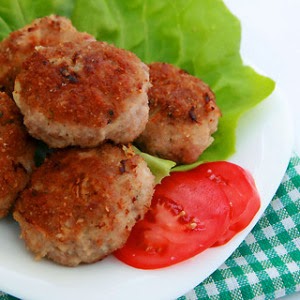


                                                              Albania Food


Friday, August 8, 2014

The Personal Side of Bias, Prejudice, and Oppression

One memory I have of witnessing prejudice is when I was in a restaurant and a mixed couple was waiting for quite sometime to be waited on. Many people were coming in the restaurant to be seated and also got their meals ahead of them. The couple asked to see the manager and he was very apologetic. The waiter made it clear that he did not want to wait on them. He was immediately fired and the manager saw to it that not only did they get their meal but it was on the house and they was invited back.


This situation diminished equity in that the couple because they was mixed were treated differently and discriminated against. They were viewed as being different because of the color of their skin. They were not treated fairly.

 The feelings this situation bought up was that my husband and I experienced a situation of prejudice/discrimination because of the color of our skin and the kind of car we was driving. We was singled out because I guess we are not supposed to drive a nice car if so we must be involved in some illegal activity. It was a horrible experience and one I would never want anyone to go through. After it was all over they was so apologetic not that the made the situation better. We were both very disturbed by the incident. We was driving through a small town headed to Syracuse after leaving a naval base in Plattsburgh. As we drove through the town we could see why we was singled out. That too was indeed racial profiling. Never Again.

I would say in both cases is to change the thinking and mentality of folks, the waiter, and the police. People need to learn that every African American is not a criminal. Some of us work and have very good jobs that put us in a good position. There are a lot of people out there we need to change in order to make things better. Sad to say even today bias, prejudice, oppression and discrimination still exist.

Saturday, July 26, 2014

Practicing Awareness of Microaggressions


One example of microaggression that I have detected was when I walked into a Nordstrom department store while visiting family in another state. I was followed around the store and it did not sit right with me. I asked the young lady if there was a problem and she said no. It was obvious to me that because of the color of my skin and if you could see the area maybe she thought I was going to steal something. I was beside myself so I left the store. When I met up with the rest of my family I told them what happened and they are white. We later went back to the store but this time we were all together. We this same lady saw me with them her whole demeanor changed. She asked if she could help us and that if we needed something just let her know. That did not happen when I went in the store the first time. She was so busy watching me that if somebody was trying to take something she would have never noticed. Even though I came back into the store with my family we did not purchase anything. We did it just to see what would happen. On another occasion a white lady clutched her purse as we walked by. On both occasions it made me feel that because of the color of my skin I was treated or dealt with differently. It was very upsetting but I held my head up high.

My perceptions on the effects of discrimination, prejudice and stereotyping people are that they can be very hurtful. Making assumptions about an individuals because of the color of their skin can have a detrimental effect on them. Labeling people in a negative manner has a lasting detrimental impact on those who experience the prejudice. I have found that people are more likely to be aggressive after they’ve faced prejudice in a given situation. They are more likely to exhibit a lack of self-control. They have trouble making good, rational decisions. Because of what I have experienced I am very conscious of these situations and I make sure I don’t do or say anything that would affect another person regardless of their race, gender, nationality etc. We are all equal in my eyes.

Saturday, July 19, 2014

Perspectives on Diversity and Culture


Trinidad Culture


In speaking with one of my neighbors who is from Trinidad she defines her culture and diversity as being very unique. Th culture in Trinidad is heavily based on ethnicity, religion, and history. Trinidad has a number of cultural traditions that have been preserved and cross-pollinated by generations of migrants from all over the world, all in one small island. Trinidad is vibrant and very creative. The music stems from classical and fold of Europe, Africa and India, combining them in original ways or adding a creole touch to create new forms that are distinctly Trinidadian. The culture of Trinidad is focused on music and carnival. The music is calypso, soca and steel-pan. Their style of dress is very colorful and the official language is English even though some speak Kweyol. From work to school and from entertainment to family, there is no single way of life in Trinidad. Like the culture, the way of life is diverse and quite individual. 

Some of the foods inn Trinidad are plantains, pineapples, sweet potatoes, maize (corn), cassava (yucca), mangoes, papaya, bananas, coconuts, beans, and numerous other foods. As far as their religion is concerned some in Trinidad are Roman Catholic, some Protestant, and others Hindi, Muslim and other Christian groups. As a result of being captured by the British slave trade brought many Africans to work on the island's plantations. When slavery was abolished in 1834, the Portuguese laborers from the island of Madeira began arriving. As a result cultural diversity was broadened on when the laborers were brought from India to work on the plantations this brought about many religious customs.


                                     Vietnamese Culture
I had the opportunity to interview the young lady from the nail salon I deal with. She is from Vietnam. In Vietnam modesty and humility are emphasized in the culture of the Vietnamese and deeply ingrained into their natural behavior. In the Vietnamese culture, bragging is often criticized and avoided. The Vietnamese culture often declines to accept praise by humbly claiming that he/she does not warrant such esteem. They do not demonstrate their knowledge, skills, or possessions without being asked to do so. Many of the Vietnamese women never sip alcohol and shy away from alcoholic beverages when offered to them. Vietnamese women who drinking are despised in their society. 

Many customs are rooted in both the Confucian respect for education, family and elders, and the Taoist desire to avoid conflict. Vietnamese tend to be very polite and guarded. The family structure in Vietnam is an extended one, unlike the typical family in the United States, which normally consists of the father, mother, and unmarried children. Their families are composed of the parents, all children, and their in-laws, the grandparents, the great-grandparents, and also in some cases, uncle, aunts and their spouses, cousins, grandchildren, great-grandchildren, and all in-laws. 

The living arrangements for the family is a house which may not accommodate everybody. The availability of living space determines the size of the family living together. But typically, one finds grandparents, father, mother, children, and grandchildren living under the same roof. Although not all members of the extended family are housed together, they tend to cluster around a certain area such as a village, small town, or places of easy access in large cities.

Vietnam's official language, is a tonal language that can be compared to Cambodia's official language, Khmer. There are other languages spoken as well such as Chinese, Khmer, Cham and other languages. Vietnamese avoid public displays of affection with a member of the opposite sex, they don’t stand with their hands on their hips, and they don’t cross arms on your chest, but they pass items with both hands. Rice is the dietary staple which most people eat three meals a day.

Vietnamese often accompany these main dishes with leafy vegetables and small bowls of salty sauces in which they dip their food. Popular dishes include sautéed vegetables, tofu, and a seafood-based broth with vegetables called canh, and a variety of pork, fish, or meat dishes. The Mahayana tradition of the Buddhism religion is dominant in Vietnam.

                                           Italian Culture


The third person I interviewed was my boss who is Italian. Family is very important for Italians. The family is the center of the social structure and provides a stabilizing influence for its members. Italians are famous for their art, culture, food, wine, lifestyle, theater, music, design and of course style.  Clothing in Italy is also very important and Italians will judge each other on clothing, shoes and accessories often within seconds of meeting one another. Clothing is often used to judge social status, education level and your family’s background. In terms of religion, Italians are predominantly Christian and belong to the Roman Catholic Church. Italian food is an important part of Italian life and includes pasta, salami, pizza and ice cream, olives, pesto and Sicilian Caponata as well as fresh fish, wine and meat. Italy is a land that is rich in culture, history and beauty.

My thinking about other people’s definitions of culture and diversity has influenced my own thinking about these topics in that culture and diversity needs to be accepted, valued and respected. In addition there is a great deal I can learn from different cultures. Since I like to cook I have some new recipes from the three individuals I spoke with. I cooked Lasagna Italian style and I must say it is better than my recipe. This just gives you an idea of how much you can learn from other cultures an how important diversity is.


References:

Gonzalez-Mena, J. (2008). Diversity in Early Care and Education (5th ed., pp. 8–13). Boston, MA: McGraw Hill.

Ngo, B. (2008). Beyond "culture clash": Understanding of immigrant experiences. Theory into Practice, 47(1), 4–11.


Saturday, July 12, 2014

My Family Culture

Pictures of Family Cultures

A description of the three items you would choose
I would take my Bible, my ipod, and pictures of family and friends

How you would explain to others what each of these items means to you
I would take my Bible because it contains the instruction I need for everyday living. This is the most important thing I need no matter what country I may be in. It is something that can unite me with any other culture since all cultures have access to the Bible.
I would take my ipod because music is universal. I enjoy music and it relaxes me. It is something I can also share with other cultures.
Having pictures of my family and friends will remind me of better times and will help me to work toward the goal of making the best of the situation for those family members that remain with me. 

Your feelings if, upon arrival, you were told that you could only keep one personal item and have to give up the other two items you brought with you
 Well since I have already lost all of my material possessions I actually would not really be affected much more than I have been. I would not feel any real difference. My main focus would be to obtain the things I really need – food, clothing and shelter.  

Any insights you gained about yourself, your family culture, diversity, and/or cultural differences in general, as a result of this exercise.
I have not really gained any additional insights regarding myself because mentally I am already prepared for this type of situation. Of course, until a person’s life is actually changed in such a drastic way, the reality of what it will be like is unknown. Even so I have no real ties to material possessions and my main concern would be for my safety and that of my family and friends. Cultural differences are not a real issue for me because I already practice diversity in my life. I am surrounded by people of many cultures and I have an understanding as well as a respect for the many differences we have. Yet these differences have in no way kept real friendships from developing.


Reference:       

Laureate Education (Producer). (2011). Family cultures: Dynamic interactions [Video file]. Retrieved from https://class.waldenu.edu

Saturday, June 28, 2014

Blog Assignment: When I Think of Research...

Doing Early Childhood Research

As a result of taking this course I have gained a great deal of insights. I have learned that when it comes to research it is a tool that we need to learn how to use and use in the right way. Researching entails talking do different ones, collecting data, accessing the data, the ethical aspects of research and more. I also learned that even though research can be time consuming there are many approaches to research and it most certainly have its advantages.

My ideas about the nature o research have changed it that I now see the value and importance of research in the field of early childhood education. Research helps me to gain the knowledge I need in the field of early childhood education and to develop and evaluate the services being offered today. I have found it necessary to continue to do research o my own as it relates to my field and others for that matter.

Planning, designing and conducting research in early childhood takes time. If I am careful in my planning, designing and conducting research then this will help me to achieve my goal. I learned in this class that it was be well laid out.

One of the challenges I encountered was finding the time to do the research. I had to force myself to make the time and put other things to the side so as to accomplish was I needed to. Another was finding the resources I needed as well. Again I made a point to set aside time so that I could accomplish my work thoroughly and it be laid out in a way that was appropriate. I found that I had to focus on what was important and the other things came secondary.

My perceptions of an early childhood professional have been modified in that I must continue to learn and do research and make sure my research is reliable if I am going to keep abreast with the changes in the field of early childhood education.

I would like to take this opportunity to thank each and every one of you for your support. I have learned a great deal from each and every one of you. I wish all of you much success as you continue your studies.

Saturday, June 7, 2014

Research Around the World

"Early Childhood Australia is a national peak non-government, non-profit organization that advocates for the best interests of young children. Early Childhood Australia has a long-standing reputation as a quality-assured knowledge broker, supported by its ethical advertising standards".

One of the current international research topics is - "The Research in Practice Series. The Research in Practice Series is a practical, easy to read resource, offering effective new approaches for those challenging issues which arise in the care and education of young children. Early Childhood Australia’s Research in Practice Series is an essential resource for those involved in the early childhood field. The books are idea-rich and to the point. The Research in Practice Series focuses on the practical, ‘hands-on’ aspects of early childhood – making them ideally suited to early childhood workers".

Other research topics are baby and toddler sleeping to help parents and caregivers in understanding and dealing with sleeping patterns of young children, and common sleeping problems that may rise with babies and toddlers. Another topic is: Child health and childhood obesity. Child health and childhood obesity are two related aspects of early childhood care and education that have been the focus of a lot of attention recently.There are many issues which impact on the health and well-being of young children.

Poor eating habits, lack of understanding of or access to food/nutrition information, and lack of fitness and physical exercise are all factors which contribute to what is becoming known as the obesity epidemic. While these are some of the risk factors, there are many simple and effective ways to prevent childhood obesity and encourage a healthy lifestyle in young children.

As I  explored this website I found that there was a great deal of healthful information that I found to be very interesting. One in particular is the fight against cyber bullying and how important it is that this starts early. I found this to be interesting because this is an issue that is so common today and children are dying as a result. Even though the internet can be a wonderful thing it can also facilitate anonymous forms of electronic aggression. Cyber bullies send very nasty messages to a individuals email account, they most remarks in forums that are not at all pleasant, and they can make life very miserable for the person they are bullying. Cyber bullying is very prevalent among children and there are many adults who engage in the same type of behavior. Dealing with cyber bullies is not an easy thing to do but it can be done. I found this information to be helpful because I know of someone who is experiencing cyber bullying and this information would be of great benefit to her. In addition I hope it will ease the stress and anxiety she is experiencing.

Reference:

Early Childhood Australia (2014). Retrieved from: http://www.earlychildhoodaustralia.org.au/